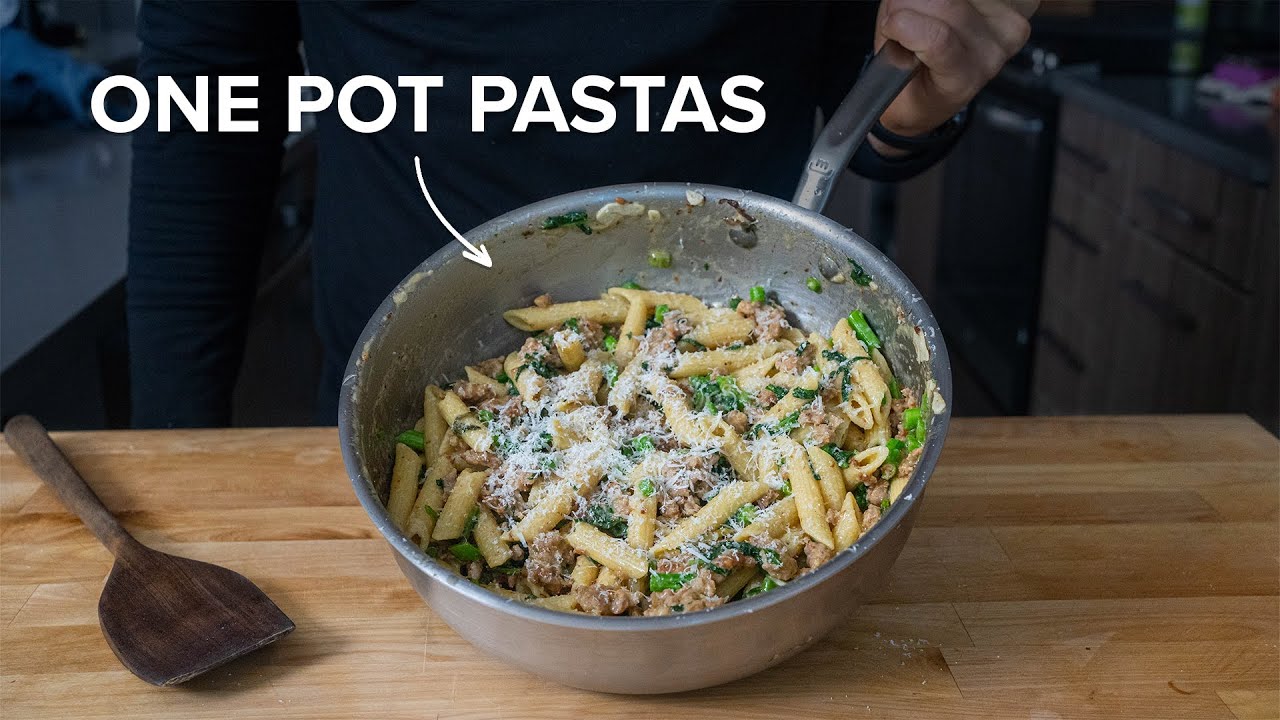
Recently, I gave Ethan Chlebowski’s “risotto” technique for cooking pasta a try. Basically, instead of cooking the pasta in quarts of boiling liquid, you cook the pasta in a wide, shallow vessel, adding just enough liquid to cover the pasta.
When I first saw the video I was skeptical: Ethan cooks a fairly small amount of pasta in a massive vessel (a wok). I had doubts that you could use this technique to cook a standard pound of dried pasta in a large skillet.
I was able to make it work, with a few tweaks.
In a large, high-walled skillet, set the heat to medium. Heat 1-2 tablespoons of vegetable oil in the pan. When the oil is hot, add your pasta. This ensures the pasta gets evenly coated with the oil and prevents it from burning.
Once your pasta has achieved a nice toasted color, turn the heat to high and add your cooking liquid. In my tests, it took about 1.5 quarts of liquid to cook 1 pound of pasta. The amount of liquid should barely cover the pasta in the pan. Once the liquid comes up to a boil, continuously stir the pasta in the pan, pushing down any pieces that try to float above the liquid.
After about 5-8 minutes, most of the liquid should be absorbed by the pasta and the pasta itself should be al dente or near it. If the liquid is low and the pasta still isn’t done, you can add more to the pan roughly a third of a cup at a time.
The key is to stir the pasta aggressively, making sure it absorbs as much liquid as possible from the pan. You’ll know it’s done when the pasta is al dente and the left over liquid in the pan has turned into a thick sauce thanks to the starches in the pasta.
Take the pasta off the heat. Now’s your chance to add whatever you want to flavor the pasta.
I recommend a shitload of cheese.
I stirred in a cup of finely grated parmesano regiano cheese directly into the pasta. The remaining liquid and residual heat turned the cheese into a glossy sauce that beautifully coated the pasta. The fact that the pasta was toasted at the start gave it a nice depth of flavor, and building the sauce directly in the pan means the cheese emulsion is much more stable and won’t split when the pasta is reheated.
This is definitely how I’ll be making pasta going forward.